A slip disc rarely waits for a convenient moment. One wrong lift, one long drive, or sometimes nothing at all, and a dull ache in the lower back turns into a sharp, radiating pain down the leg. If you’ve landed here searching for slip disc physiotherapy or wondering whether physiotherapy for slip disc actually works, the short answer is: for the large majority of people, yes, and it’s usually the first line of treatment doctors recommend before anything more invasive.
This guide walks through what a slip disc actually is, what the research says about physiotherapy for it, which movements help and which to avoid, and when you need more than exercise alone.
What Is a Slip Disc (Herniated Disc)?
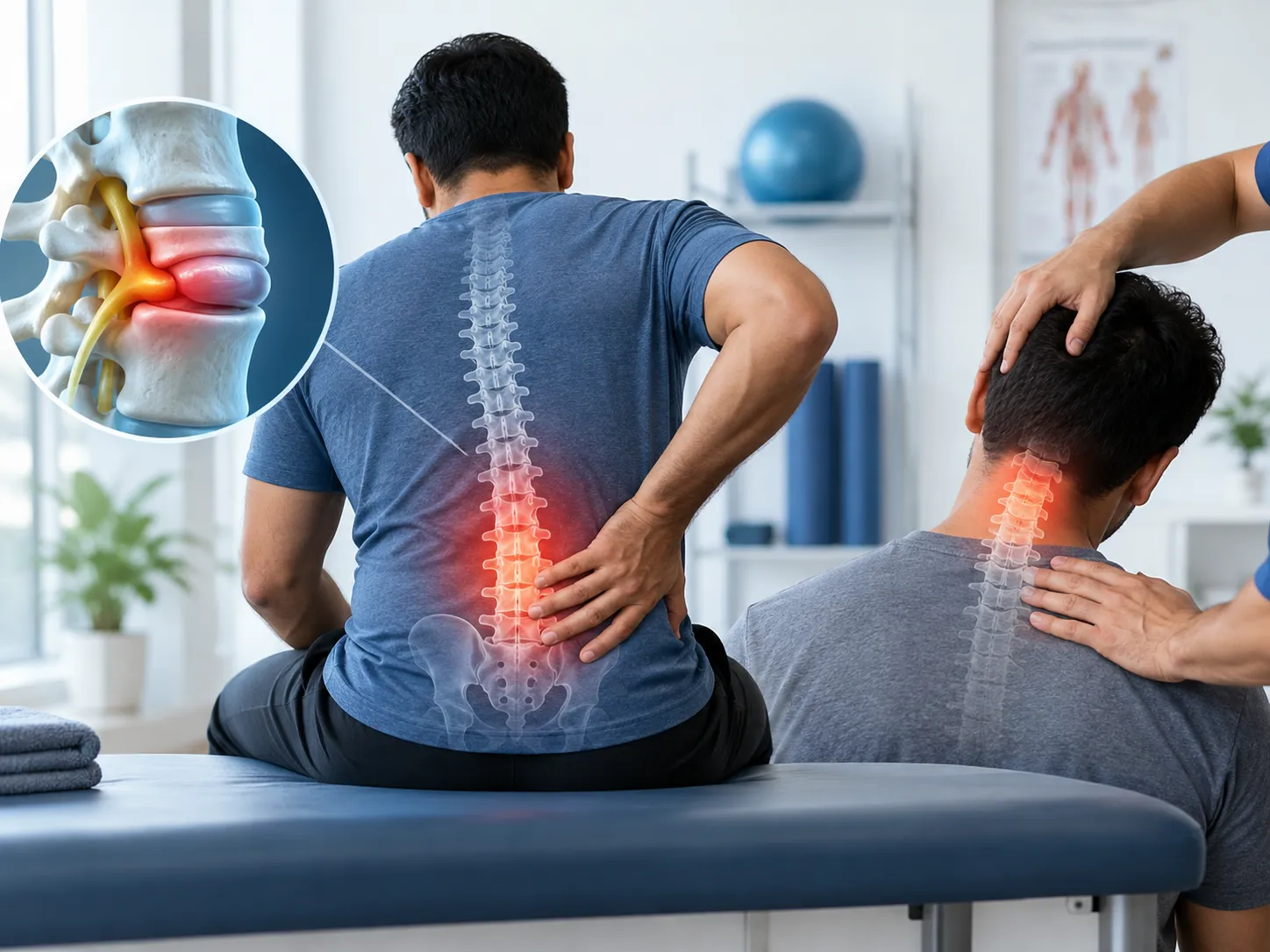
A “slip disc,” “slipped disc,” and “herniated disc” all describe the same injury. Between each bone (vertebra) in your spine sits a disc with a tough outer ring and a soft, gel-like center. When that outer ring tears, the inner material pushes out and can press on nearby nerves. As Mayo Clinic’s disc anatomy explainer puts it, this is why a herniated disc is also called a slipped disc or ruptured disc, and why it can cause pain, numbness, or weakness in an arm or leg depending on where it happens.
Most slip discs occur in the lower back (lumbar spine), with the neck being the second most common site. According to common risk factors for herniation documented by the U.S. National Library of Medicine, disc herniation is linked to heavy lifting, being overweight, repetitive bending or twisting, prolonged sitting or standing, smoking, and an inactive lifestyle. It’s also worth knowing that back pain in general is an enormous global health issue, not a rare or unusual complaint. The leading cause of disability worldwide is low back pain, affecting an estimated 619 million people in 2020 alone.
Is Physiotherapy Good for a Slip Disc? What the Research Says
If you’re asking “is physiotherapy good for slip disc,” or specifically whether slip disc can be cured by physiotherapy, the evidence leans strongly in favor of trying it first. The APTA’s physical therapy guide states plainly that the majority of herniated disks respond best to physical therapy and do not require surgery. The same guide notes the condition most often affects people between 30 and 50 years old, and men are diagnosed roughly twice as often as women.
This lines up with what spine specialists themselves recommend. A 2024 systematic review covering fewer than 10 percent need surgery for lumbar disc herniation, with conservative treatment (medication, physiotherapy, and sometimes injections) as the standard first step. So if your question is “can physio help slipped disc” cases before they escalate, the clinical consensus says it’s usually where treatment starts, not a fallback after everything else fails.
Even in cases that do eventually need surgery, physiotherapy still has a documented role afterward. A 2025 review of 55 trials, covering 4,311 patients, found that physical therapy following lumbar disc surgery is effective at reducing pain and improving both function and quality of life. In other words, physiotherapy for slip disc isn’t just a pre-surgery option, it’s part of recovery on either side of that decision.
How Physiotherapy Helps in Slip Disc Recovery
So how does physiotherapy help in slip disc cases mechanically? A physiotherapist isn’t just handing you a sheet of stretches. Treatment for herniated disc and physiotherapy typically works on a few fronts at once:
Reducing nerve irritation and pain. Specific positions and gentle movements are used to take pressure off the affected nerve root, which is often what’s causing the leg or arm pain in the first place.
Building core and spinal support. Weak core, back, and hip muscles let more load fall directly on the discs. Strengthening these reduces the day-to-day stress on the injured disc and lowers the chance of a repeat episode.
Correcting posture and movement patterns. How you sit, stand, bend, and lift matters. A large part of slip disc physiotherapy is retraining these habits so you stop reinjuring the same spot.
Mayo Clinic’s diagnosis and treatment guidance frames physiotherapy as the standard next step after activity modification and pain medication, and notes that surgery is generally only discussed if conservative treatment, physiotherapy included, hasn’t improved symptoms after about six weeks.
Can We Walk in Slip Disc? Movement Dos and Don’ts
This is one of the most common questions people ask once the pain sets in: can we walk in slip disc, or should we just rest until it passes? The NHS’s guidance on slipped discs is direct about this: staying active is part of self-care, and while very severe pain may call for some initial rest, prolonged bed rest is not the recommendation. Gentle movement, including walking, is generally encouraged as symptoms allow, alongside painkillers if needed.
That said, “walking is fine” doesn’t mean every movement is fine. Sudden twisting, heavy lifting, prolonged sitting, and high-impact activity are the movements most likely to aggravate a slip disc, especially in the early, painful phase. This is exactly why a supervised program matters more than generic advice off the internet: what’s safe depends on which disc level is affected and how it’s presenting in your case specifically.
Best Physiotherapy Exercises for Slip Disc: General Categories
There’s no single universal exercise sheet for slip disc physiotherapy, because the right exercises depend on which disc is affected, how severe the herniation is, and which nerve (if any) is being irritated. That said, most programs draw from a few broad categories:
- Extension-based positioning, often used early on to help centralize leg or arm pain back toward the spine
- Core and lumbar stabilization work, to build the muscular support that takes pressure off the disc long-term
- Nerve mobility exercises, sometimes called nerve gliding, when a nerve like the sciatic nerve is involved
- Low-impact conditioning, such as walking or supervised cycling, to maintain fitness without loading the spine
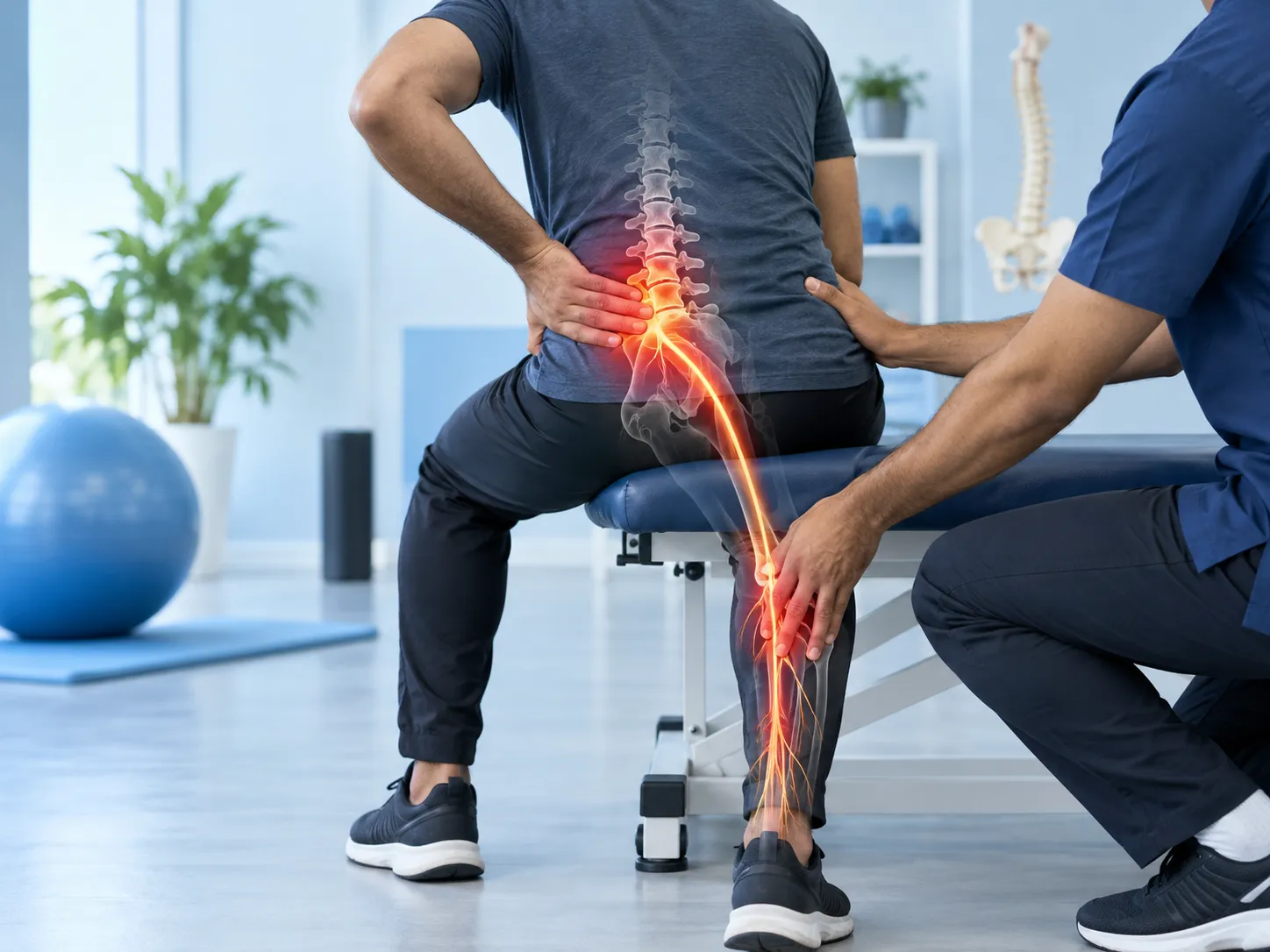
If your slip disc is also pressing on the sciatic nerve, you’re likely also dealing with radiating leg pain, a condition on its own worth understanding in more depth. We’ve covered that connection between sciatica caused by a slipped disc and put together a dedicated set of sciatica-friendly stretches and exercises if leg pain is part of your picture.
When a Slip Disc Needs More Than Physiotherapy
Physiotherapy is the recommended first step for the vast majority of slip disc cases, but there are situations where it’s not enough on its own, and a few where you need urgent medical attention rather than an appointment booking.
The NHS’s slipped disc guidance lists specific emergency red flags: numbness around the genitals or buttocks, inability to urinate, loss of bladder or bowel control, sudden or worsening weakness in the legs or arms, or loss of feeling in one or both legs. These can indicate a rare but serious complication called cauda equina syndrome, and they require immediate emergency care, not physiotherapy.
Outside of those emergency signs, surgery may be discussed if pain, numbness, or weakness hasn’t improved after a genuine course of conservative treatment, generally in the range of six weeks per Mayo Clinic’s guidance cited above. This is also consistent with the finding that fewer than 10 percent of lumbar disc herniation cases end up needing surgical intervention at all.
What to Expect at HEAL Rehab Centre for Slip Disc Physiotherapy
At HEAL Rehab Centre, low back and neck pain management, including slip disc and herniated disc cases, sits within our broader orthopedic rehabilitation programs. Your assessment starts with understanding exactly where your pain is coming from, what movements aggravate it, and whether nerve involvement (like sciatica) is part of the picture, before any exercise program is built around your specific presentation rather than a generic printout.
Our team is led by Dr. Mohammed Nidhal, Founder and Lead Physiotherapist, alongside Dr. Mariyam Afreen, Co-Founder and Physiotherapist. If you’d like to see more physiotherapy topics we’ve covered, our physiotherapy blog is a good next stop.
Frequently Asked Questions
Slip disc ki physiotherapy kaise hoti hai?
Physiotherapy for a slip disc usually starts with an assessment of which disc is affected and whether a nerve is involved, followed by pain-relief positioning, gentle mobility work, and progressive core-strengthening exercises. The exact program is built around your specific symptoms rather than a fixed routine.
Can slip disc be cured by physiotherapy?
For most people, yes. Multiple clinical sources confirm the majority of slip disc cases improve with conservative treatment, including physiotherapy, and don’t require surgery. “Cure” in the strict sense varies case by case, but symptom relief and return to normal activity is the realistic and common outcome.
Can we walk in slip disc?
Generally yes, gentle walking is encouraged as pain allows, and prolonged bed rest is not recommended. Very severe pain may call for brief initial rest, but staying reasonably active is part of standard self-care guidance.
Is physiotherapy good for slip disc, or will I eventually need surgery?
Physiotherapy is the recommended starting point for nearly all slip disc cases. Surgery is only considered if symptoms don’t improve after a genuine trial of conservative treatment (typically around six weeks) or if specific red-flag symptoms appear.
How long does slip disc physiotherapy take to show results?
This varies by individual and severity, and no fixed timeline applies to every case. What’s consistent across the sources cited above is that clinicians generally expect a meaningful conservative treatment trial before considering surgery, which points to several weeks of physiotherapy as the standard window for assessing progress.
What should I avoid doing with a slip disc?
Sudden twisting movements, heavy lifting, and prolonged bed rest are the general categories to avoid. Beyond that, what’s safe depends on which disc is affected and how it’s currently presenting, which is exactly what a physiotherapy assessment is for.
If you’re dealing with slip disc symptoms and want an assessment specific to your case rather than generic advice, you can book a consultation at HEAL Rehab Centre.