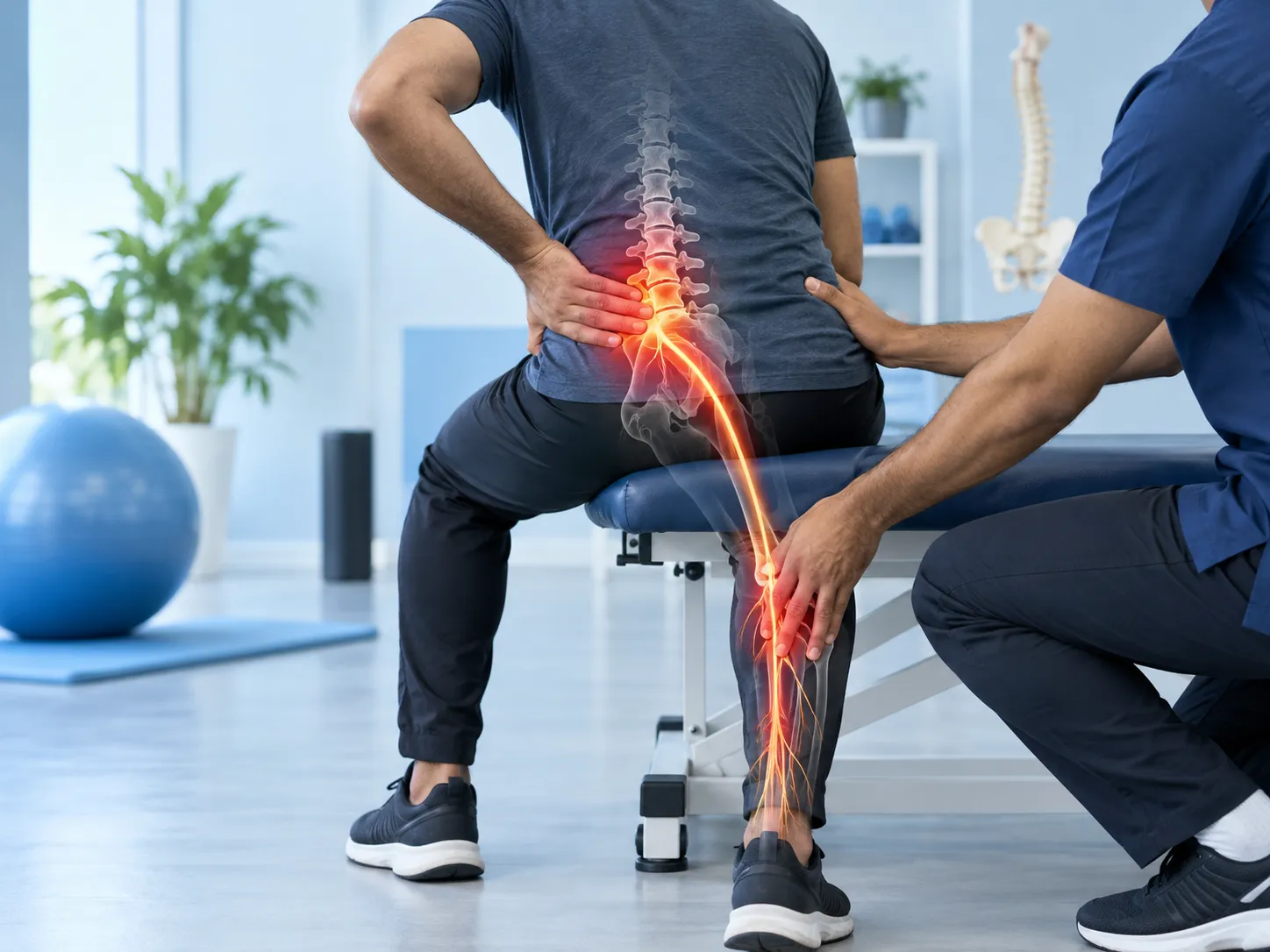
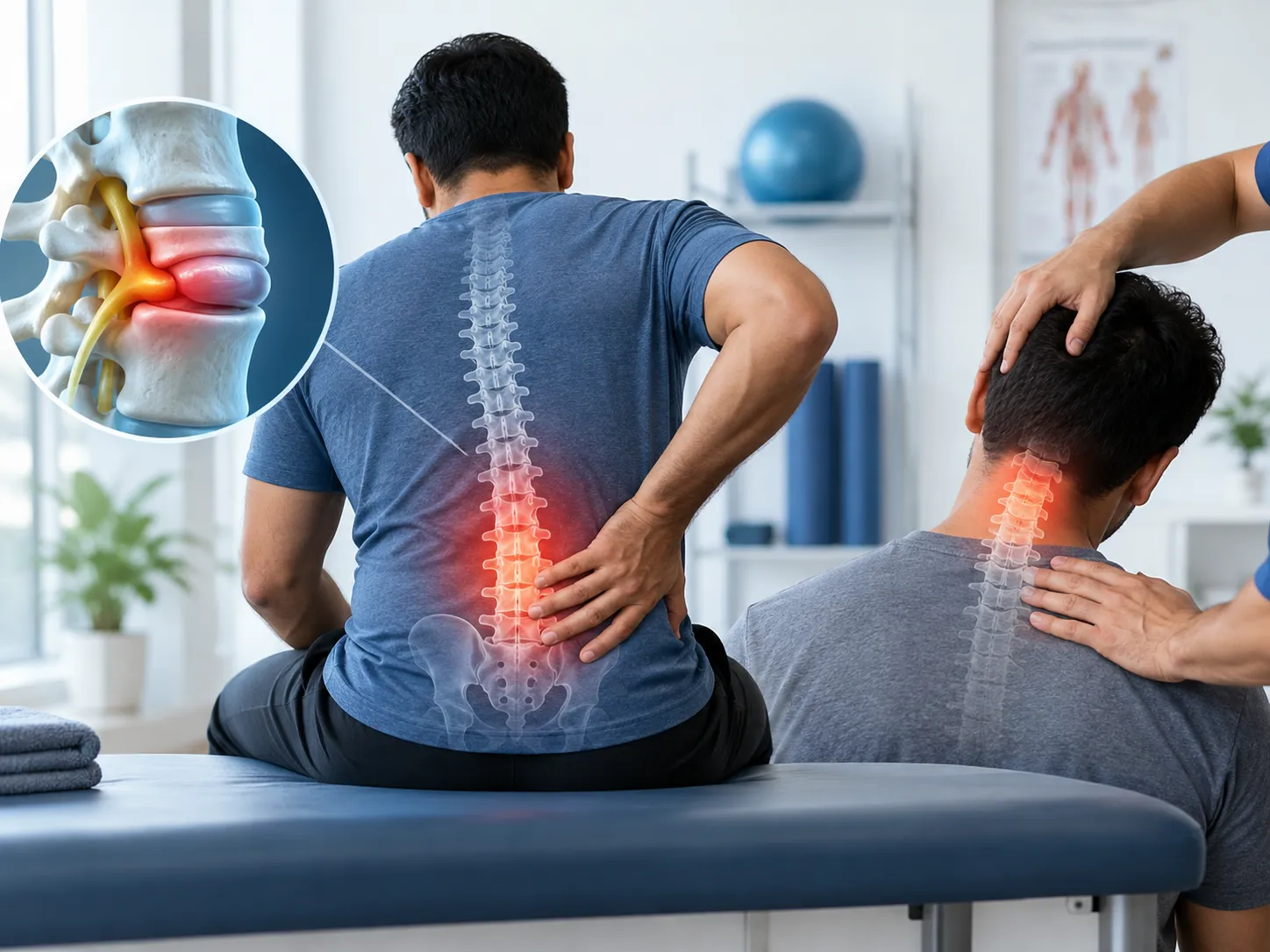
A herniated disc, often called a slip disc in India, doesn’t mean you have to stop moving. It means you have to move differently for a while. The soft inner material of the disc has pushed through a tear in its outer ring and is pressing on a nearby nerve root, so certain positions and loads make that pressure worse while others relieve it. Knowing the difference is what separates a recovery plan from a setback.
This guide walks through the herniated disc exercises to avoid in the lower back, the herniated disc neck exercises to avoid, and the Pilates moves that need to be modified or skipped, along with what a physiotherapist would suggest instead. If you’re in Mangaluru and dealing with sciatica or spine pain, HEAL Rehab Centre’s team works through exactly this kind of assessment with patients every week.
What Happens Inside a Herniated Disc When You Move
Every disc sits between two vertebrae and acts as a shock absorber. When its outer ring (the annulus) tears and the inner nucleus bulges or herniates, movements that increase pressure inside the disc can push more material toward the nerve, while movements that reduce that pressure allow the irritation to settle. According to Mayo Clinic’s diagnostic overview, most herniated discs occur in the lower back, rarely need surgery, and often improve with time and the right activity modifications.
How much a position actually loads the disc has been measured directly. In a well-known study where researchers implanted a pressure sensor into a volunteer’s lumbar disc, intradiscal pressure research findings showed that bending forward while sitting or standing substantially increases pressure compared with standing upright or lying down, and that constantly changing position helps keep the disc nourished. That single finding explains most of the “exercises to avoid” advice you’re about to read: anything that combines spinal flexion with load or speed tends to raise disc pressure and nerve irritation the most.
A clinical review of disc herniation published in Current Reviews in Musculoskeletal Medicine adds that most lumbar disc herniations occur posterolaterally, which is exactly the direction that forward bending, rounding, and twisting under load push disc material toward.
Herniated Disc Exercises to Avoid in the Lower Back
If you have a lumbar (lower back) herniated or slip disc, the following movements typically need to be paused or heavily modified while symptoms are active, especially if you feel pain, numbness, or tingling running down a leg:
- Sit-ups and crunches. Repeated spinal flexion loads the front of the disc directly and is one of the most consistently flagged exercises to avoid with a herniated disc.
- Standing toe touches and unsupported forward bends. These put the spine into full flexion with no support, which is one of the highest-pressure positions for the disc.
- Straight leg raises and double leg lifts. Many people substitute lower back muscles for weak hip flexors here, which strains the lumbar spine instead of the legs.
- Rounded-back deadlifts and heavy squats. Combining forward flexion with an external load multiplies the pressure on the disc far beyond bodyweight bending alone.
- Leg press with deep knee-to-chest flexion. The position rounds the lower spine under resistance, similar to a loaded sit-up.
- High-impact running, jumping, and skipping. Repeated ground impact sends shock through the spine faster than the disc can absorb it during a flare-up.
- Twisting or rotational lifts. Rotation combined with flexion is a common mechanism for the original herniation and can aggravate an already irritated disc.
A slip disc in the lower back is also the most common cause of sciatica, so if the pain is radiating down your leg rather than staying in your back, it’s worth working through a proper physiotherapy program for sciatica rather than guessing at exercises on your own.
Herniated Disc Neck Exercises to Avoid
Cervical (neck) disc herniations respond to the same principle from a different angle: anything that compresses, flexes, or forcefully rotates the neck tends to aggravate them.
- Overhead lifting and pressing. Lifting weight above the head increases the compressive load running straight down through the cervical discs.
- Prolonged forward head posture. Looking down at a phone or laptop for long stretches holds the neck in sustained flexion, which is a slower version of the same mechanical stress as bending the lower back.
- High-impact and contact sports. Running, jumping, and any sport with collision risk can jolt or compress the cervical spine.
- Forced neck hyperextension or fast rotation. Movements that twist or crank the neck through its end range can increase nerve root compression rather than relieve it.
- Heavy shrugs or resistance work that loads the neck. Any lift where the neck muscles are gripping under load rather than staying relaxed adds unnecessary compression.
What tends to help instead is the opposite motion: a controlled cervical retraction, commonly called a chin tuck. A multimodal physical therapy approach documented in a Cureus case report combined McKenzie cervical retraction exercises with manual therapy and postural correction for a patient with cervical radiculopathy, following the American Physical Therapy Association’s Neck Pain Clinical Practice Guideline, which supports this kind of multimodal approach even though it doesn’t endorse McKenzie exercises used alone.
Pilates and a Herniated Disc: What to Modify or Skip
Pilates has a reputation as spine-friendly, and the research generally backs that up, but not every Pilates exercise is safe during an active flare-up. The distinction comes down to the same mechanism again: how much spinal flexion the move demands, and whether it’s loaded.
Moves that typically need to be skipped or heavily modified with an active herniation include the Roll-Up, the Hundred with both legs extended low, the Teaser, and the Jackknife, all of which ask the spine to flex under resistance for an extended hold. As one UK-based Pilates specialist who works with disc patients puts it, the rear surface of the disc is its weakest part, and bending forward presses the soft centre of the disc against that weak point, so full flexion should be avoided until a physiotherapist or consultant clears it.
That doesn’t mean Pilates itself is off the table. A network meta-analysis on Pilates published in the Journal of Orthopaedic & Sports Physical Therapy compared Pilates, strength training, core-based work, and mind-body exercise for chronic low back pain and found Pilates had the highest likelihood of reducing both pain (93% on the ranking analysis used) and disability (98%) among the exercise types studied. A clinical trial on Reformer Pilates is also currently comparing Reformer Pilates against conventional physiotherapy specifically in patients with lumbar disc herniation, which shows there’s active clinical interest in structured, supervised Pilates protocols for this exact condition rather than blanket avoidance.
The practical takeaway: pelvic curls, imprint-based bridging, and quadruped or modified cat-cow work within a pain-free range can usually stay in a Pilates session, while anything resembling a loaded sit-up should wait. This is exactly the kind of case-by-case call a personalised orthopedic and neurological rehabilitation plan is meant to make, rather than following a generic list.
Safer Alternatives That Support Recovery
Staying still for long periods is not the goal. The NHS’s guidance on slipped discs is direct about this: gentle exercise such as walking, swimming, or yoga, started as early as possible, helps people recover faster than prolonged rest does, and the type of exercise matters less than whether it avoids making the pain worse.
Exercises that are generally well tolerated during recovery include:
- Walking on flat ground, building duration gradually
- Glute bridges performed with a neutral spine rather than an arched or rounded back
- Bird-dog holds for core stability without spinal flexion
- Cervical retraction (chin tucks) for neck-related herniations
- Gentle swimming or water-based movement, once cleared by a clinician
For anyone whose pain is running down the leg rather than staying local, a safe sciatica exercise routine is a good place to start rather than experimenting with general internet advice.
Red Flags: When to Stop and Get Checked
Most herniated discs are managed conservatively without surgery, but a small number of cases need urgent attention. The NHS’s page on red flag symptoms needing care lists warning signs that call for immediate medical attention rather than home exercise: numbness around the groin or buttocks, sudden loss of bladder or bowel control, progressive weakness in one or both legs, or numbness spreading down both legs at once. These can indicate cauda equina syndrome, a rare but serious complication that needs emergency evaluation, not a stretching routine.
How HEAL Rehab Centre Approaches Disc Recovery in Mangaluru
Every herniated disc case is a little different depending on which level is affected, how far the disc has herniated, and which direction it’s pointing, so a one-size-fits-all exercise list only goes so far. At HEAL Rehab Centre in Nandigudda, assessments are led by Dr. Mohammed Nidhal, our Founder and Lead Physiotherapist, alongside Dr. Mariyam Afreen, our Co-Founder and Physiotherapist, who build individualised programs rather than handing patients a generic sheet of exercises.
That individualised approach is also what patients mention in their own words. One patient recovering from a torn PCL, a different injury to a disc herniation but the same principle of guided, progressive rehab, described the experience as amazing, with staff who were caring and helpful throughout recovery. If you’re dealing with neck or back pain from a herniated or slip disc, the first step is an assessment, not guesswork. You can book a physiotherapy assessment to get a plan built around your specific herniation rather than a generic list of dos and don’ts.
Frequently Asked Questions
Can I do sit-ups if I have a herniated disc?
Generally no, not while symptoms are active. Sit-ups and crunches load the front of the disc through repeated spinal flexion, which is one of the movements most consistently linked to worsening herniated disc symptoms. Isometric core work that doesn’t flex the spine is usually a safer substitute.
Is walking safe with a slipped disc?
Yes. The NHS specifically recommends gentle exercise such as walking as soon as you’re able to, noting that gradually increasing activity helps you recover faster than staying inactive, as long as the activity doesn’t cause or worsen pain.
Can I still do Pilates with a herniated disc?
Often yes, but not every move. Exercises that keep the spine in a neutral or supported position, like pelvic curls or modified bridging, tend to be fine, while flexion-heavy moves like the Roll-Up, Teaser, or Jackknife usually need to be skipped or modified until a physiotherapist clears full spinal flexion.
What neck exercises should I avoid with a cervical disc herniation?
Avoid overhead lifting, forced hyperextension or fast rotation, prolonged forward head posture, and high-impact or contact sports. Controlled cervical retraction (chin tucks) is generally better tolerated and is a core exercise in guideline-supported physical therapy for cervical radiculopathy.
When should I stop exercising and see a doctor for a slipped disc?
Stop immediately and seek urgent care if you notice numbness around the groin or buttocks, loss of bladder or bowel control, or progressive weakness in your legs. These are signs of a rare but serious complication and are not something to manage with home exercise.